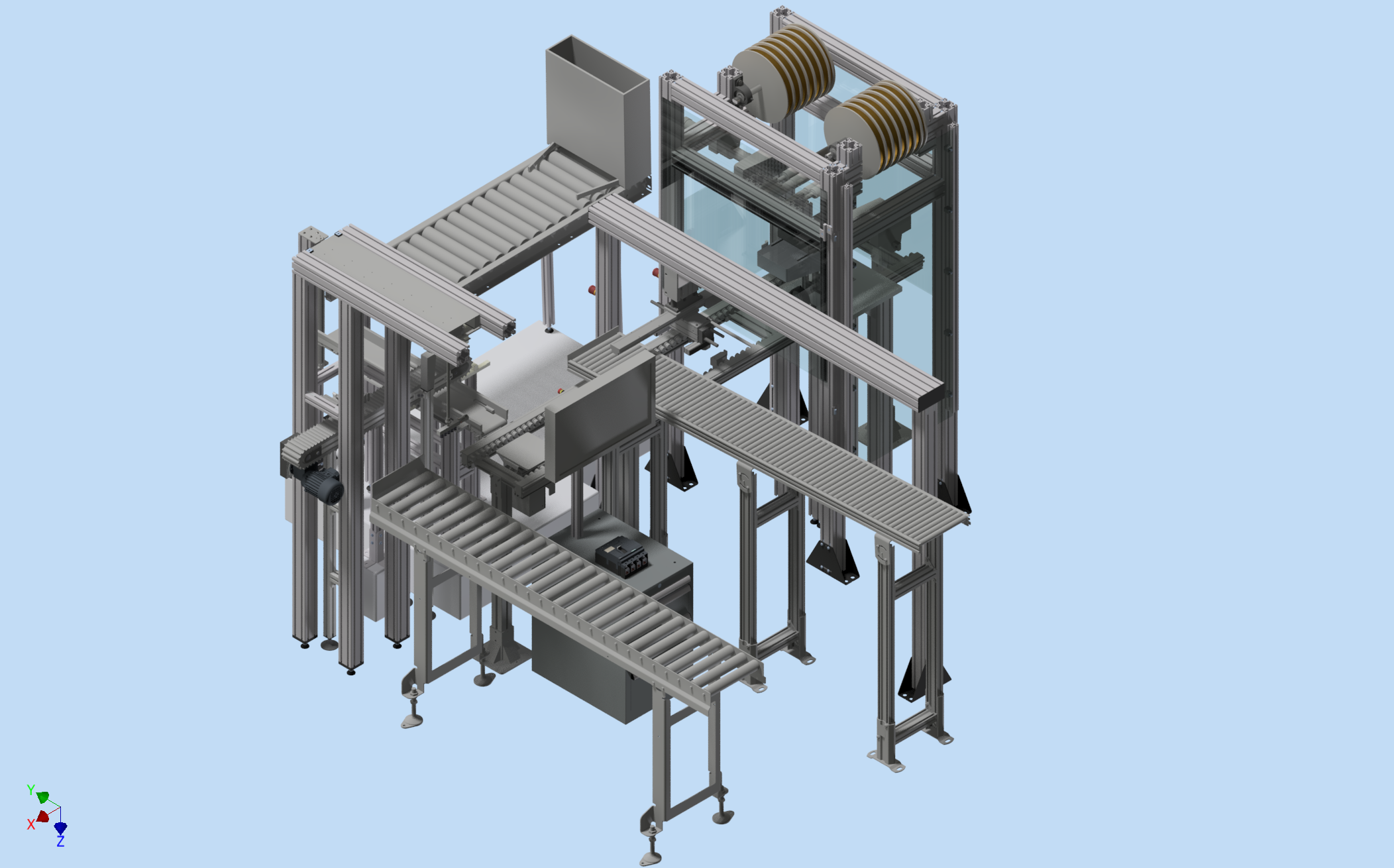
🛠️ Project Overview
As part of the Design, Materials, and Manufacturing module, I worked in a team to develop a concept for a fully automated machine that assembles battery modules for an electric hovercraft. The challenge: design a system that could handle every step — from sorting cells to spot-welding connections — under a strict time and budget constraint.
🎯 Objectives
The machine had to perform the following tasks:
- Unpack cylindrical battery cells
- Sort them by polarity
- Place them into carriers
- Spot-weld copper strips for electrical connectivity
- Eject completed modules
- Complete a full cycle in under 200 seconds
- Stay within a budget of £20,000
📄 Click here to view the full brief (PDF)
📦 My Contributions & Deliverables
Throughout the project, I contributed to the design and evaluation of the system by producing:
✅ 3D CAD models of the full assembly and critical sub-systems
✅ UML activity diagrams to visualise system logic and task sequencing
✅ Manufacturing operations plan outlining each production stage
✅ DFMEA and fault tree analysis to identify risks and failure modes
✅ Storyboard and physical layout showing process flow and ergonomics
📘 View the Full Report
📄 Open full report in a new tab
📐 View the Technical Drawings
💬 Final Thoughts
This project tested my ability to balance creativity with feasibility in a fast-paced, multidisciplinary team. From selecting components to evaluating system logic and risk, I gained hands-on experience in applying design-for-manufacture (DFM) principles, safety assessments, and collaborative problem-solving. The tight timeframe pushed my CAD and time management skills — and gave me a real taste of system-level mechanical design in a professional setting.